Gynecologic Oncologist
Gynecologic cancers demand courage, faith, and the right medical support. That is why a gynecologic oncologist is a physician who combines the precision of a surgeon, profound knowledge of oncology, and the empathy essential for navigating the treatment journey. Mechnikov Hospital features a team for whom every patient is not just a "case," but a person with a history, fears, and hopes. We do more than treat the disease; we help restore self-belief. Advanced techniques, professionalism, and support are the three pillars of our gynecologic oncology care.
"Most gynecologic cancers can be detected in their early stages—even before symptoms appear. That is why routine check-ups, Pap smears, and ultrasounds are of paramount importance. Cervical, endometrial, or ovarian cancer is not a death sentence if a woman seeks medical help in time. Every day, we witness how early diagnosis saves lives," comments a gynecologic oncologist at Mechnikov Hospital.

We utilize a comprehensive spectrum of advanced tests—from cytology and endoscopy to CT and MRI—ensuring the early detection of pathologies.
Our treatment teams include surgical oncologists, anesthesiologists, hematologists, endocrinologists, and rehabilitation specialists. This ensures a continuum of care—from diagnosis to full recovery.
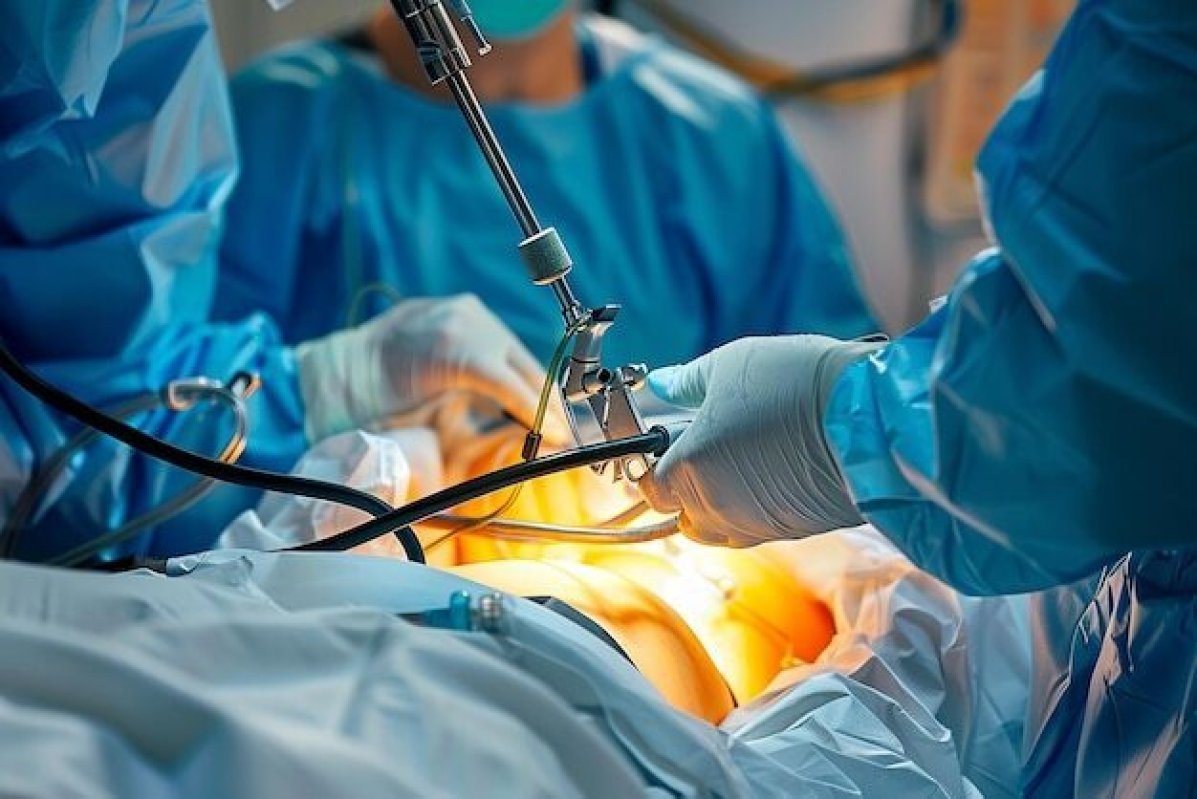
Next-generation endoscopic systems enable highly precise surgeries with minimal blood loss and rapid recovery.
We have created an environment where patients can undergo treatment with peace of mind: single and double rooms, professional nursing care, and psychological support.
Conditions Treated by a Gynecologic Oncologist
A gynecologic oncologist specializes in the diagnosis, treatment, and ongoing management of patients with benign, precancerous, and malignant tumors of the female reproductive system.
Patients are referred to our specialists for the following conditions:
- Cervical cancer. Most commonly associated with the human papillomavirus (HPV). It develops gradually and can therefore be detected at the precancerous stage using a Pap smear and colposcopy.
- Endometrial (uterine) cancer. A tumor of the uterine lining that typically occurs during menopause. The first warning sign is spotting or bleeding after a prolonged absence of menstruation.
- Ovarian cancer. A tumor forming in the ovarian tissues that often remains asymptomatic for a long time. Its danger lies in late detection, making regular ultrasound examinations crucial.
- Fallopian tube and vulvar tumors. Rare but aggressive neoplasms requiring specialized surgical treatment. At our hospital, these surgeries are performed in collaboration with surgical oncologists.
- Precancerous conditions. These include cellular changes in the cervix or endometrium (dysplasia, erosions, polyps) that are not yet cancerous but may progress to a malignancy if left untreated.
- Benign tumors. Myomas, fibroids, and cysts are non-cancerous but can cause bleeding and pain, and may undergo malignant transformation over time, thus requiring monitoring by a gynecologic oncologist.
We focus equally on treating oncological pathologies and preventing them: routine check-ups, cytological screenings, tumor marker testing, and HPV vaccination help mitigate the risk of developing cancer in the future.
Symptoms That Warrant a Visit to a Gynecologic Oncologist
Early-stage gynecologic cancers often progress without obvious symptoms. However, there are red flags you should pay immediate attention to:
- bleeding between periods or after intercourse;
- pain in the lower abdomen or lower back;
- a feeling of pressure on the bladder or rectum;
- changes in vaginal discharge (odor, color, consistency);
- loss of appetite, sudden weight loss, or chronic fatigue;
- abdominal bloating or a feeling of fullness in the pelvic area;
- enlarged lymph nodes in the groin.
Experiencing even one of these symptoms is a reason to see a gynecologist. The doctor will perform an examination, ultrasound, and cytology, or refer you to a gynecologic oncologist for a definitive diagnosis.
Diagnosis of Gynecologic Cancers
Our hospital features state-of-the-art diagnostic facilities capable of detecting even the most subtle tissue changes. We utilize the following methods:
- Cytology (Pap test). Detects precancerous changes in the cervix.
- Colposcopy with targeted biopsy. Optical magnification of the mucosa to take tissue samples for histological analysis.
- Pelvic ultrasound. Evaluates the structure of the uterus and ovaries and identifies any neoplasms.
- Computed Tomography (CT) and Magnetic Resonance Imaging (MRI). Used to determine the extent of the disease spread.
- Laboratory diagnostics. Tumor marker testing, hormonal profiling, and complete blood counts.
- Endoscopic methods (hysteroscopy and laparoscopy). Allow for direct visualization of internal organs and immediate treatment if necessary.
Thanks to our close collaboration with the laboratory and the hospital's surgical oncology center, patients receive their test results quickly, enabling prompt initiation of treatment.
Treatment of Gynecologic Cancers
Treatment plans are tailored individually based on the diagnosis, stage of the disease, age, and the woman's reproductive goals. Our hospital utilizes the following approaches:
- Surgical treatment. We perform both classic and minimally invasive (laparoscopic and hysteroscopic) surgeries. Whenever possible, our surgeons prioritize organ-preserving techniques to maintain the woman's fertility.
- Reconstructive surgery. Following the removal of tumors or partial organ resections, surgeries are performed to restore the anatomical structure and function of the pelvic organs.
- Combined therapy. If necessary, surgery is supplemented with radiation or chemotherapy in collaboration with the hospital's oncology department.
- Post-treatment follow-up. Patients remain under the active supervision of a gynecologic oncologist and undergo scheduled follow-up exams to prevent recurrences.
Our surgeons have extensive experience in performing complex surgeries for tumors of the cervix, endometrium, ovaries, and vulva. All procedures strictly adhere to oncological safety standards and prioritize the patient's post-treatment quality of life.
Organ-Preserving Surgeries
Modern gynecologic oncology does not always entail organ removal. Thanks to emerging technologies and precise diagnostics, it is often possible to perform organ-preserving interventions—removing only the affected tissue while preserving the uterus, ovaries, or cervix. These surgeries are indicated for early-stage cervical and ovarian cancers, benign tumors, and precancerous conditions. This allows the woman not only to recover but also to retain the ability to have children in the future.
We approach treatment with profound empathy: it is essential not only to eradicate the disease but also to preserve women's health, natural integrity, and the right to a fulfilling life.
How to Book an Appointment with a Gynecologic Oncologist in Dnipro
Appointments with a gynecologic oncologist can be scheduled through the registry or the form on our hospital's website. Our administrators will help you choose a convenient time and explain which preliminary tests are recommended before your visit.
A timely consultation with a gynecologic oncologist provides the opportunity to detect disease at an early stage, initiate prompt treatment, and preserve what matters most—life, health, and femininity!