Hip Replacement
Hip pain over time alters not only your gait but your entire life. At first, it becomes harder to climb stairs, then to walk your usual distance without stopping, and eventually, just getting up from a chair or putting on shoes without assistance becomes a challenge. When every step is accompanied by pain, a person instinctively limits their movements, gives up work, travel, and favorite hobbies, becoming dependent on painkillers and the help of loved ones. Hip replacement is a surgery that fundamentally changes this situation. It is not about temporary relief, but about restoring joint function using artificial components that take over the load-bearing function from the damaged bones and cartilage. For most patients, after a properly performed hip replacement, the pain disappears, weight-bearing capacity is restored, and the ability to walk, work, and live a normal, active life returns.
One of the country's first specialized joint replacement centers has been operating here since 1991. We have thousands of successful surgeries and a unique database of clinical cases.
Surgeries are performed by board-certified orthopedic surgeons, Candidates of Medical Sciences, and Honored Doctors of Ukraine with over 20–30 years of experience in major joint arthroplasty.
Under the state program, we offer certified IRENE and AK Medical systems. Our paid services provide premium implants from AAP Joints and other leading manufacturers, including ceramic models.
Equipped with cutting-edge technology, including C-arm fluoroscopy, orthopedic power tools, digital preoperative planning, and 3D modeling for complex cases.
Minimally invasive approaches reduce postoperative pain, accelerate rehabilitation, and lower the risk of implant dislocation.
We offer physical therapy, mechanotherapy, physiotherapy, and customized recovery programs under expert supervision.
Laboratory tests, ultrasound, X-ray, MSCT, and consultations with cross-disciplinary specialists are all available within the hospital.
90–95% of joint replacement patients return to an active lifestyle: pain is eliminated, mobility is restored, and their overall quality of life is significantly improved.
At Mechnikov Hospital, hip replacements have been performed since 1991 within the specialized Center for Pathology and Joint Replacement. Over these decades, we have progressed from the first implant models to modern minimally invasive techniques, amassed the unique experience of thousands of surgeries, and developed clear protocols for diagnostics, preparation, surgery, and rehabilitation. Today, for the patient, this is not an "experimental" method, but a standard, predictable, and controlled stage in the treatment of severe hip joint disease.
It is important to understand: hip replacement is not indicated for every random hip ache. It is a major elective procedure used when the joint is anatomically destroyed, conservative treatment has exhausted its potential, and pain and limited mobility significantly impair the quality of life. That is why we always begin with a detailed diagnosis, assessing the indications and risks, and explaining the expected outcomes and recovery stages to the patient.
At the same time, for a person with severe hip osteoarthritis or the sequelae of a femoral neck fracture, hip replacement often becomes the very surgery that restores independence: allowing them to live without constant pain, move independently, care for themselves, and no longer feel "confined" to their home or bed.
What is Hip Replacement
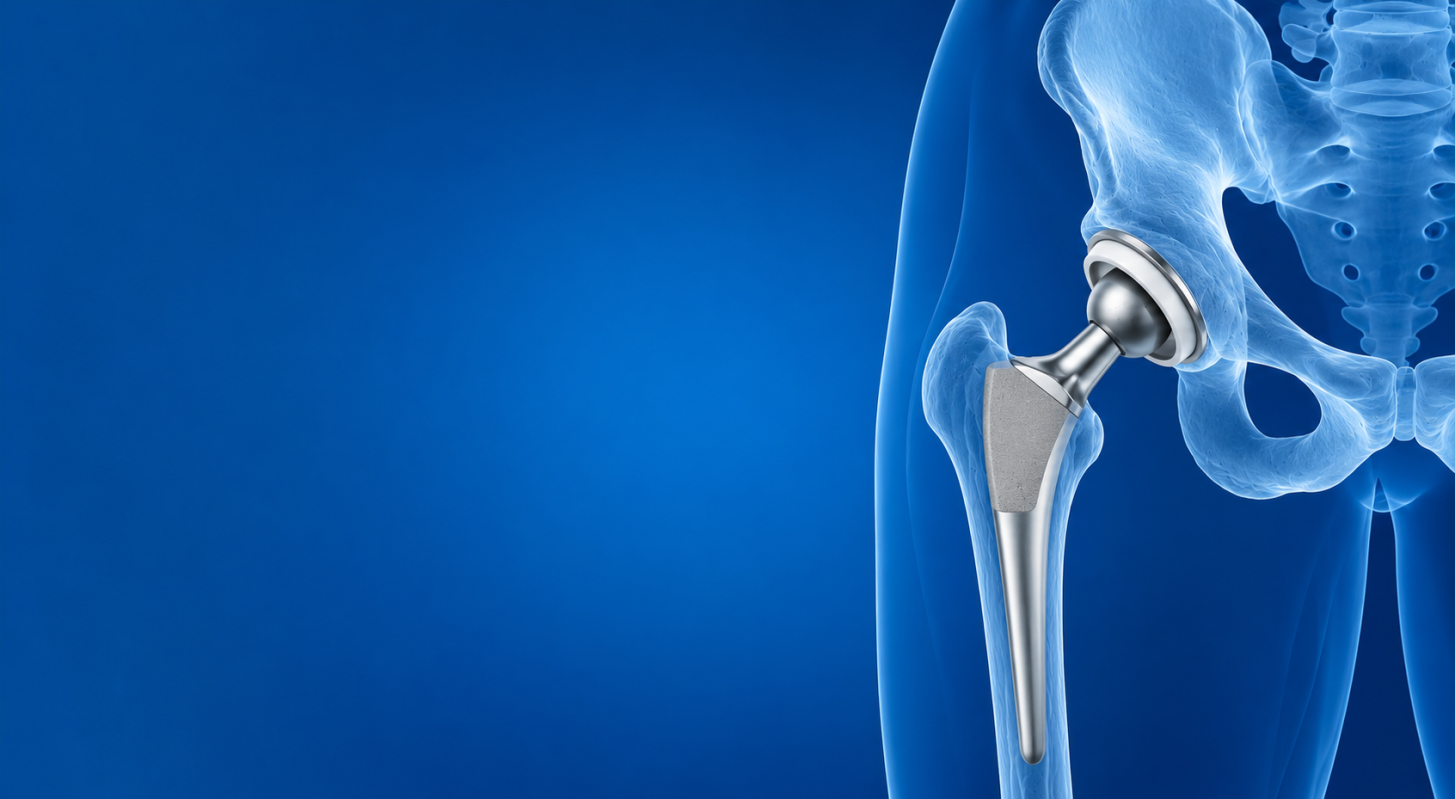
Hip replacement (arthroplasty) - is a surgical procedure in which the damaged native structures of the joint (parts of the femur and the acetabulum of the pelvis) are removed and replaced with artificial components—an endoprosthesis. In simple terms, we replace a "worn-out" joint with a new, artificial one that takes over the primary functions of movement and weight-bearing.
Anatomically, the hip is a "ball-and-socket" joint: the femoral head (the ball) fits into the acetabulum of the pelvic bone (the socket). Both surfaces are covered with smooth cartilage, with a layer of synovial fluid between them to ensure smooth gliding. In conditions like osteoarthritis (coxarthrosis),avascular necrosis, or following fractures, this cartilage breaks down, the bone deforms, bone spurs (osteophytes) develop, and the joint space narrows. In this state, the joint no longer "glides" but painfully rubs "bone on bone."
During a hip replacement, we remove the damaged femoral head, prepare the canal inside the femur, and insert a special prosthetic stem. An artificial head—a smooth, spherical component that mimics a healthy joint surface—is securely attached to the top of this stem. On the pelvic side, we prepare the acetabulum, shape it into a perfect hemisphere, and insert an acetabular cup—the component that acts as the "socket." A liner (usually made of polyethylene) is placed inside the cup, against which the artificial head will subsequently glide.
Ultimately, a new hip joint is formed: the destroyed bone surfaces are replaced with metal or ceramic components featuring a polyethylene or ceramic insert, ensuring smooth movement and stable support. A properly selected and correctly implanted prosthesis allows a person to walk, sit, stand, and sleep without pain and without a feeling of the joint "locking."
In our clinical practice, we utilize several main types of hip replacement.
Total Hip Replacement
The complete replacement of both joint components—the femoral head and the acetabulum. A femoral component (stem and head) and an acetabular component (cup and liner) are implanted. This is the most common method for treating osteoarthritis, avascular necrosis, post-traumatic changes, and dysplasia.
Partial Hip Replacement (Hemiarthroplasty)
The replacement of only the femoral component—the head and neck of the femur are replaced with a prosthetic head, while the pelvic acetabulum is left intact. We primarily use this option for elderly and geriatric patients with femoral neck fractures, where the main goal is to quickly restore weight-bearing ability, reduce the risk of complications from prolonged bed rest, and get the patient upright.
Revision Hip Replacement
A secondary surgery performed when the primary implant has worn out over time, loosened, become unstable, or when other complications arise (infection, periprosthetic fracture, etc.). Revision arthroplasty is technically more demanding: we are working with altered bone, often with reduced bone stock, and using specialized revision constructs with longer stems and additional fixation elements. Such surgeries are performed by highly experienced surgeons, and at Mechnikov Hospital, these interventions are a routine part of the Center's practice.
Implant Fixation Methods
All modern fixation options are utilized at Mechnikov Hospital.
Cementless Fixation
The "gold standard" for patients with good bone density.
- The components feature a porous or roughened coating that allows for natural bone ingrowth over time (osseointegration).
- Advantages: long lifespan, high stability.
- Recommended for patients up to 70–75 years old without severe osteoporosis.
- Weight-bearing is initially graduated while osseointegration occurs (4–8 weeks).
Cemented Fixation
The method of choice for fragile or osteoporotic bone.
- Bone cement, which hardens quickly, is injected between the bone and the prosthesis.
- Provides immediate stability right after surgery.
- Allows for full weight-bearing as early as the next day.
- Primarily used for older patients and those with osteoporosis.
Indications for Hip Replacement
Hip replacement is not "surgery on demand" or a treatment for early-stage hip discomfort. It is a major surgical intervention performed under strictly defined clinical conditions when the joint no longer functions and conservative methods fail to provide an acceptable quality of life.
Indications are based not only on X-ray findings but also on a combination of symptoms, functional limitations, and the disease's impact on daily activities.
Osteoarthritis of the Hip (Coxarthrosis) Stage III–IV
The most common cause. In the advanced stages, cartilage is practically completely worn away, the joint space has disappeared, and bone surfaces rub against one another.
The patient experiences:
- constant groin pain, particularly at night;
- severe limitation of movement (difficulty putting on shoes, sitting down, or rotating the leg);
- limping, a sensation of the joint "locking";
- progressive limb shortening.
At stages III–IV, no injections or pills can "regrow" new cartilage. Joint replacement becomes the only effective treatment.
Avascular Necrosis (AVN) of the Femoral Head
A section of the femoral head "dies" due to disrupted blood supply, loses its structural integrity, and collapses under body weight.
Often associated with:
- prolonged corticosteroid use;
- post-COVID-19 complications;
- trauma;
- vascular disorders.
It manifests as acute or aching pain in the groin, rapid deterioration of gait, and a feeling of instability. In most cases, it requires a total hip replacement.
Femoral Neck Fractures in Older Adults
In people aged 65 and older, a femoral neck fracture often fails to heal due to poor blood supply and osteoporosis. The primary goal is to restore weight-bearing ability as quickly as possible to avoid the complications of prolonged bed rest (pneumonia, deep vein thrombosis, pressure ulcers).
Indications:
- displaced intra-articular fractures;
- fractures that cannot be stably fixed with surgical hardware;
- sequelae of malunion or nonunion.
In these situations, we perform either a partial or total hip replacement.
Rheumatoid Arthritis
A chronic autoimmune disease where the immune system attacks joint tissues. Over time, it leads to deformities and a persistent pain syndrome.
Indications for joint replacement:
- constant pain syndrome;
- severe limitation of motion;
- radiographic signs of joint destruction.
Post-Traumatic Arthritis
The result of old injuries or complex fractures that have altered joint anatomy. Misalignment of the joint surfaces leads to uneven wear, pain, and restricted movement. When conservative methods are exhausted, a replacement is indicated.
Congenital Deformities and Dysplasia
If a joint is abnormally formed from birth, it wears out much faster. In adulthood, this often necessitates early joint replacement, sometimes in patients as young as 30–40. The surgery is technically more complex but yields a significant functional improvement.
Symptoms Indicating It's Time to Consider Surgery
We lean towards surgical treatment when a patient reports:
- constant or nighttime pain in the hip joint;
- inability to walk 100–200 meters without severe pain;
- limping, changes in gait;
- dependence on painkillers;
- difficulty with daily activities (putting on shoes, getting in a car, climbing stairs);
- emotional exhaustion due to chronic pain.
The key criterion: the joint is painful and fails to perform its function.
Why It's Important Not to Delay Surgery
When a joint is anatomically destroyed, delaying surgery for years leads to:
- the development of contractures and a drastic reduction in range of motion;
- worsening deformities, which complicates and prolongs the surgery;
- poorer rehabilitation outcomes;
- secondary pain in the back and knees due to an altered gait pattern;
- increased reliance on painkillers, carrying risks for the stomach, heart, and kidneys.
The sooner a patient seeks surgical help when indications are present, the more straightforward the procedure and the better the prognosis.
Expert Opinion
Indications for hip replacement are always determined comprehensively—not based on a single X-ray or an isolated symptom, but on a combination of medical criteria and the patient's lifestyle circumstances. It is crucial for individuals to understand that surgery is not an "extreme measure" or a "last resort," as it often seems. In orthopedics, there is a clear cause-and-effect relationship: once a joint is anatomically destroyed, no other treatment method can restore its structure and function.
The cause: in stage III–IV osteoarthritis, avascular necrosis, or the aftermath of a fracture, cartilage is completely lost, bone is deformed, and the joint space has vanished. These are irreversible changes.
The consequence: every load-bearing action causes bone-on-bone friction, accompanied by pain, limb shortening, limping, and a gradual decline in mobility. Over time, contractures form, pelvic and spinal biomechanics are altered, and pain develops in the lower back and knees.
Conclusion: when a patient begins to experience constant pain, limited mobility, and a decreased quality of life, a timely hip replacement is the best solution. With every year of waiting, the surgery becomes technically more challenging, and rehabilitation takes longer.
It is also important to mention painkillers. Prolonged use of NSAIDs increases the risk of gastrointestinal, cardiovascular, and renal complications. Surgery relieves the pain, allowing the patient to discontinue regular medication use and improving their overall physical health.
From a psychological standpoint, hip replacement is often a "return to oneself": a person who spent years limiting their activity out of fear of pain or falling regains the freedom to walk, travel, socialize, and participate fully in family life.
The recommendation is simple: if conservative treatment no longer helps, pain restricts your activity, and radiographic changes indicate severe joint damage, you should not delay consulting an orthopedic surgeon. Timely joint replacement helps avoid complications, speeds up recovery, and achieves the best functional outcome.
Free Hip Replacement Surgery
At Mechnikov Hospital, patients can undergo hip replacement surgery free of charge under the state medical guarantees program. This means the cost of the implant, surgery, anesthesia, and inpatient care is covered by the state budget within a package funded by the National Health Service of Ukraine (NHSU).
Who is Eligible for Free Joint Replacement
Access to the program is available to patients who meet the following conditions:
- Ukrainian citizenship and possessing official documentation;
- age 18 and older;
- medical indications for joint replacement, confirmed by an orthopedic surgeon;
- absence of absolute contraindications;
- willingness to receive the type of endoprosthesis procured by the state.
Under the program, patients do not choose the brand or specific implant model, as these are centrally procured by the Ministry of Health (MoH).
Which Implants are Provided Free of Charge
The state supplies the hospital with certified implants from manufacturers determined via tender. Currently, these are:
- IRENE (China)
- AK Medical (China)
Cementless systems:
- porous-coated titanium stem (Ti6Al4V);
- porous-coated acetabular cup;
- polyethylene liner;
- metal heads.
Cemented systems (for older patients or those with osteoporosis):
- stem designed for cemented fixation;
- polyethylene cup fixed with bone cement;
- metal heads.
All implants are fully certified in Ukraine.
When the Program Does Not Cover Treatment
The paid option is required if:
- the patient wishes to have an implant from a different manufacturer not procured by the state;
- the hospital is temporarily out of free endoprostheses (quota exhausted);
- additional services are desired (superior comfort room, extended diagnostics);
- absolute contraindications are present;
- the patient lacks documents or Ukrainian citizenship.
Waiting List
A unified electronic waiting list is maintained for all patients. This ensures a transparent and sequential scheduling process for surgery.
The waiting time depends on:
- the number of allocated implants;
- the number of patients in the queue;
- the type of prosthesis (cemented/cementless);
- the volume of urgent cases.
On average, the wait is up to 6 months, though this timeframe may vary for some patients.
Patient Routing Algorithm Under the State Program
To receive a free hip replacement, it is essential to follow a strict sequence of steps.
Step 1. Visit Your Family Doctor
The first stage is a visit to your local family doctor or general practitioner.
At this stage:
- complaints and symptoms are assessed;
- a basic X-ray is recommended;
- an e-referral to an orthopedic surgeon at Mechnikov Hospital is issued.
Without an e-referral, the consultation will not be registered in the NHSU system as part of the program.
Step 2. Consultation with an Orthopedic Surgeon
The patient schedules an appointment at the consultative polyclinic, bringing:
- passport and identification code;
- e-referral;
- X-rays of the pelvis and hip joints.
The physician:
- conducts a clinical examination;
- assesses mobility, contractures, and limping;
- analyzes the results of diagnostic studies;
- makes a preliminary decision regarding indications for surgery;
- refers the patient for further diagnostics if needed.
Step 3. Medical Advisory Commission (MAC)
The MAC confirms:
- persistent loss of joint function;
- the need for joint replacement;
- the absence of absolute contraindications;
- the feasibility of performing the surgery under the program.
An official conclusion is entered into the medical records—serving as the basis for inclusion in the waiting list.
Step 4. Entry into the Electronic Waiting List
Following the MAC's decision:
- the patient is added to the unified state registry;
- their position in the queue is determined;
- the patient can check their estimated call-up date.
Step 5. Preparation for Hospitalization
As the patient's turn approaches, they are invited for final pre-op examinations, and a hospitalization date is scheduled.
Required documents:
- passport;
- identification code;
- proof of residence extract;
- documents confirming preferential status (if applicable);
- contact details of the patient and a trusted proxy;
- information on the recommended type of fixation.
Step 6. Hospitalization and Surgery
Once all examinations are completed, the patient is admitted to the inpatient department for subsequent surgical treatment.
Paid Hip Replacement: Options and Implant Selection
In addition to the state program, Mechnikov Hospital offers a full spectrum of paid hip replacement services. This option is suitable for patients who:
- want a premium-tier implant installed;
- wish to select the brand and design of the prosthesis in consultation with their surgeon;
- have atypical anatomy or complex deformities;
- do not want to wait in the state queue;
- require revision or complex reconstructive surgeries.
Paid arthroplasty offers a wider selection of implants and greater personalization, but it is performed by the exact same team of surgeons adhering to the same rigorous safety standards.
Brands the Hospital Works With
We use implants from leading European and American manufacturers.
One of our key partners is the German manufacturer AAP Joints (aap Implantate AG):
- high-precision German engineering;
- biocompatible materials (titanium, cobalt-chrome);
- innovative porous coatings;
- ceramic femoral heads;
- a wide range of components for customized sizing;
- enhanced stability and extended lifespan.
We also utilize other renowned brands with proven clinical efficacy.
Can the Patient Choose the Implant with the Doctor?
Yes. In the paid format, the patient is an active participant in the process. During the consultation with the operating surgeon, the following factors are considered:
- age;
- level of physical activity;
- anatomy of the acetabulum and femoral canal;
- bone density;
- expected load levels;
- comorbidities.
Several implant options are formulated, and the patient selects the optimal one together with the physician.
Advantages of Paid Hip Replacement
- Wider Choice of Implants
The ability to select the brand, materials, fixation type, and bearing surface tailored to specific needs.
- Avoiding the Waitlist
Surgery can be scheduled and performed in a much shorter timeframe.
- Innovative Models
Premium implants offer lower wear rates, a longer lifespan, and superior stability.
- Solutions for Complex Cases
For dysplasias, revisions, or severe deformities, premium systems are frequently the best available option.
Preoperative Diagnostics for Hip Replacement
Preoperative diagnostics are critical for patient safety, accurate surgical planning, and predictable outcomes. Examinations are conducted in accordance with modern orthopedic and anesthesiological protocols.
Instrumental Methods
X-ray (Radiography)
The mandatory baseline imaging:
- AP (anteroposterior) view of the pelvis;
- additional views as indicated.
Allows assessment of joint destruction, deformities, osteophytes, the condition of the femoral canal, and signs of osteoporosis. Based on the X-rays, templating is performed—a preliminary calculation of implant sizing.
Computed Tomography (CT, MSCT)
Prescribed for:
- dysplasia;
- post-traumatic deformities;
- revision surgeries;
- complex acetabular defects.
Enables the creation of a 3D model of bone structures to ensure precise component positioning.
MRI
Used selectively when soft tissue evaluation is needed or when early-stage avascular necrosis is suspected.
Laboratory and Clinical Examinations
Performed prior to surgery:
- complete blood count (CBC) and urinalysis;
- blood biochemistry (kidney and liver function, electrolytes, total protein);
- blood glucose;
- coagulogram;
- ECG;
- chest fluoroscopy or X-ray;
- lower extremity venous Doppler ultrasound, as indicated;
- consultations with a cardiologist, endocrinologist, nephrologist, or other specialists if necessary.
Anesthesiological Risk Assessment
The anesthesiologist:
- analyzes the test results;
- evaluates the cardiovascular and respiratory systems;
- determines surgical risk using the ASA physical status classification system;
- selects the optimal anesthesia method (typically spinal anesthesia).
As a multidisciplinary facility, Mechnikov Hospital provides the full spectrum of preoperative testing on-site. This significantly shortens preparation time and streamlines coordination among specialists.
Preparation for Surgery
Preparation for a hip replacement involves medication adjustments, nutritional changes, eradication of infectious foci, and home setup.
Medication Adjustments
Anticoagulants and antiplatelets (Warfarin, Clopidogrel, Aspirin, Xarelto):
- discontinued 5–7 days prior;
- substituted with low-molecular-weight heparins at the doctor's discretion.
NSAIDs (Ibuprofen, Diclofenac, Nimesulide):
- stopped 3–5 days prior.
Diabetes medications (Metformin and analogues):
- temporarily withheld 24–48 hours beforehand;
- blood sugar is managed under the supervision of an endocrinologist.
Hormonal therapies (contraceptives, HRT):
- may be paused 4 weeks before surgery.
Cardiac medications:
- generally not stopped, taken the morning of surgery with a sip of water.
The patient must provide the doctor with a comprehensive list of all medications they take.
Nutrition and Metabolic Status
Recommendations:
- increase dietary protein (meat, fish, eggs, dairy);
- ensure adequate intake of iron and Vitamin C;
- correct anemia if present;
- if possible, lose 2–3 kg of body weight;
- maintain proper hydration.
Eradication of Infectious Foci
Critically important prior to joint replacement:
- dental clearance;
- ENT evaluation;
- gynecological exam for women, urological exam for men;
- stabilization of any chronic infections.
Patients will not be cleared for surgery until all infectious foci are fully resolved.
Home Environment and Psychological Preparation
We recommend:
- removing throw rugs and obstacles at home that could cause a fall;
- ensuring your bed is at a proper height;
- installing grab bars in the bathroom, if possible;
- purchasing crutches/a walker, a long-handled shoehorn, and an abduction pillow in advance.
Patients should clearly understand the surgical stages and post-operative rules. We always explain the treatment plan in detail to alleviate anxiety and set realistic expectations.
The Hip Replacement Surgical Procedure
The surgery typically lasts 45–90 minutes, depending on the patient's anatomy and case complexity.
Anesthesia
In 90–95% of cases, spinal anesthesia is utilized:
- the patient remains conscious or is under light sedation;
- complete absence of pain;
- reduced stress on the heart and lungs;
- faster recovery from anesthesia and lower risk of thromboembolism.
General anesthesia is used only if there are specific contraindications to spinal anesthesia.
Surgical Approach and Technique
We utilize muscle-sparing techniques, which allows us to:
- minimize muscle damage;
- reduce postoperative pain;
- lower the risk of dislocation;
- accelerate recovery.
During the operation, the damaged parts of the joint are removed, and the endoprosthesis components (stem, cup, liner, head) are implanted.
Precision Control
In the operating room, we use:
- a C-arm fluoroscope to verify component positioning in real time;
- state-of-the-art orthopedic power tools.
This guarantees the precise positioning of the implant and optimal joint biomechanics.
Postoperative Inpatient Care
The patient typically remains in the hospital for about 10–14 days:
- daily physician rounds;
- dressing changes;
- pain management;
- infection and deep vein thrombosis prophylaxis;
- instruction on proper walking techniques and movement restrictions.
Discharge usually occurs on the day sutures are removed, provided the patient is confidently mobilizing with crutches.
Postoperative Period
The postoperative period is a critical phase of recovery. During this time, the new joint stabilizes, muscle strength is rebuilt, and the patient learns safe movement patterns.
When the Patient Starts Walking
Early mobilization begins the very next day:
- the patient sits on the edge of the bed;
- takes their first steps using a walker or crutches;
- learns the rules for safe movement.
This reduces the risk of blood clots and pneumonia, and accelerates recovery.
Weight-Bearing on the Leg
Cemented fixation:
- full weight-bearing is usually permitted on day one;
- patients return to household activities more rapidly.
Cementless fixation:
- graduated weight-bearing (30–50% of body weight or as tolerated);
- final stability is achieved in 4–8 weeks;
- sometimes only partial weight-bearing is recommended initially.
Assistive walking devices
- walker - during the first few days, especially for older adults;
- crutches - for 4–6 (up to 8) weeks;
- cane - starting at 1.5–2 months;
- walking unassisted - typically around 2.5–3 months.
Pain Management
We employ multimodal analgesia—combining different classes of medications to effectively control pain while minimizing side effects. This keeps the patient comfortable enough to actively participate in physical therapy.
The 90-Degree Rule and Movement Restrictions
For the first 2–3 months, the patient must:
- avoid bending the hip past 90°;
- never cross their legs;
- avoid sudden twisting or pivoting motions;
- sleep with a pillow between their legs;
- use raised chairs and elevated toilet seats.
Returning to Work and Daily Activities
- sedentary/desk work - after 4–6 weeks;
- physical labor - roughly 3 months;
- driving - usually after 6–8 weeks;
- stairs and light household chores - starting from week 3–4.
Follow-up Visits
- first check-up - at 4 weeks;
- second check-up - at 6 months;
- thereafter - annually.
Rehabilitation After Hip Replacement
Rehabilitation starts in the hospital and continues for several months.
Phase 1. Early Rehabilitation (Days 1–7)
Goals:
- activating the muscles;
- stabilizing the joint;
- DVT prophylaxis.
Activities:
- breathing exercises;
- isometric exercises for the thighs and glutes;
- transitioning to a seated position;
- first steps with a walker;
- practicing walking on flat surfaces and stairs.
Phase 2. Outpatient Phase (Weeks 2–6)
Goals:
- increasing range of motion within safe limits;
- establishing a proper gait pattern;
- strengthening muscles.
Exercises:
- gentle stretching;
- resistance band exercises;
- weight-shifting exercises onto the operated leg.
Phase 3. Functional Recovery (Weeks 6–12)
Goals:
- restoring a symmetrical gait;
- building stamina;
- training for safe daily household activities.
Modalities used:
- stationary bike;
- pool therapy;
- balance and coordination exercises.
Phase 4. Return to an Active Lifestyle (Months 6–9)
The patient can safely:
- walk long distances;
- swim;
- ride a bicycle on level ground;
- engage in Nordic walking.
Rehabilitation is considered complete when the patient walks freely without assistive devices, climbs stairs without pain, and feels their joint is stable.
Living with a Hip Implant
A properly implanted prosthesis allows you to lead an active, comfortable life free from chronic pain.
General Principles
- gradually increase activity levels;
- strictly monitor leg positioning during the first few months;
- listen to your body;
- adhere to load-bearing restrictions.
Permitted Activities
Daily life:
- independent walking;
- light household chores;
- stair climbing using handrails;
- sleeping on your back or non-operated side with a pillow between your knees.
Sports (after 8–10 months):
- swimming;
- stationary cycling, later transitioning to outdoor cycling;
- Nordic walking and brisk walking;
- moderate fitness routines without high-impact loads.
Long-Term Recommendations
Allowed:
- active walking;
- traveling, including air travel;
- gardening (avoiding prolonged bending);
- driving (once cleared by your surgeon).
Not Allowed:
- running, jumping, high-impact aerobics;
- contact sports;
- downhill skiing, snowboarding;
- heavy weightlifting.
Everyday Tips
In transport:
- choose seats with enough room to extend your leg comfortably;
- avoid very low seats.
At home:
- remove throw rugs that pose a tripping hazard;
- elevate chairs and toilet seats;
- install grab bars if possible.
Returning to sexual activity is generally possible around 6–8 weeks, strictly using positions that do not involve excessive hip flexion or rotation.
The ultimate measure of success is the "forgotten joint": after 6–12 months, the vast majority of patients no longer feel the presence of the implant, movements become natural, gait is even, and quality of life returns to normal.