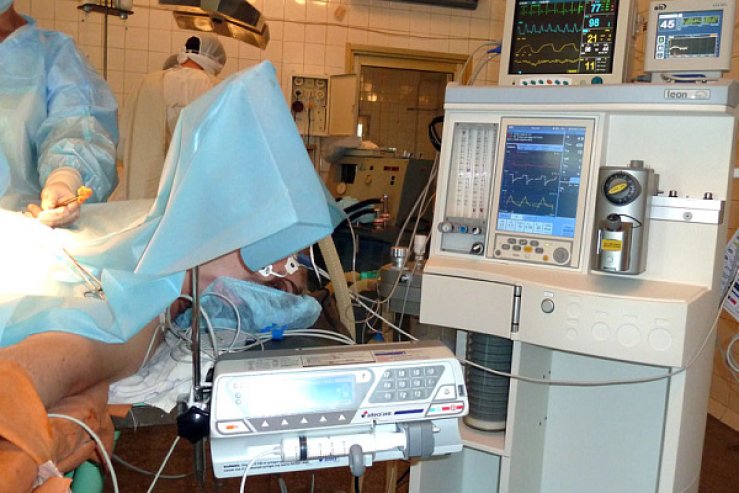
Endocrine Surgery
The Department of Endocrine Surgery at Mechnikov Hospital is a leading center where patients with thyroid, parathyroid, and adrenal gland disorders receive comprehensive care, from accurate diagnosis to advanced surgical treatment and rehabilitation. Each year, the department performs over 850 surgeries, approximately 20% of which are for thyroid cancer. The postoperative complication rate is just 1.2%, one of the lowest not only in Ukraine but across Europe. These statistics reflect our surgeons' expertise, state-of-the-art equipment, and our daily commitment to maximizing patient safety and outcomes.
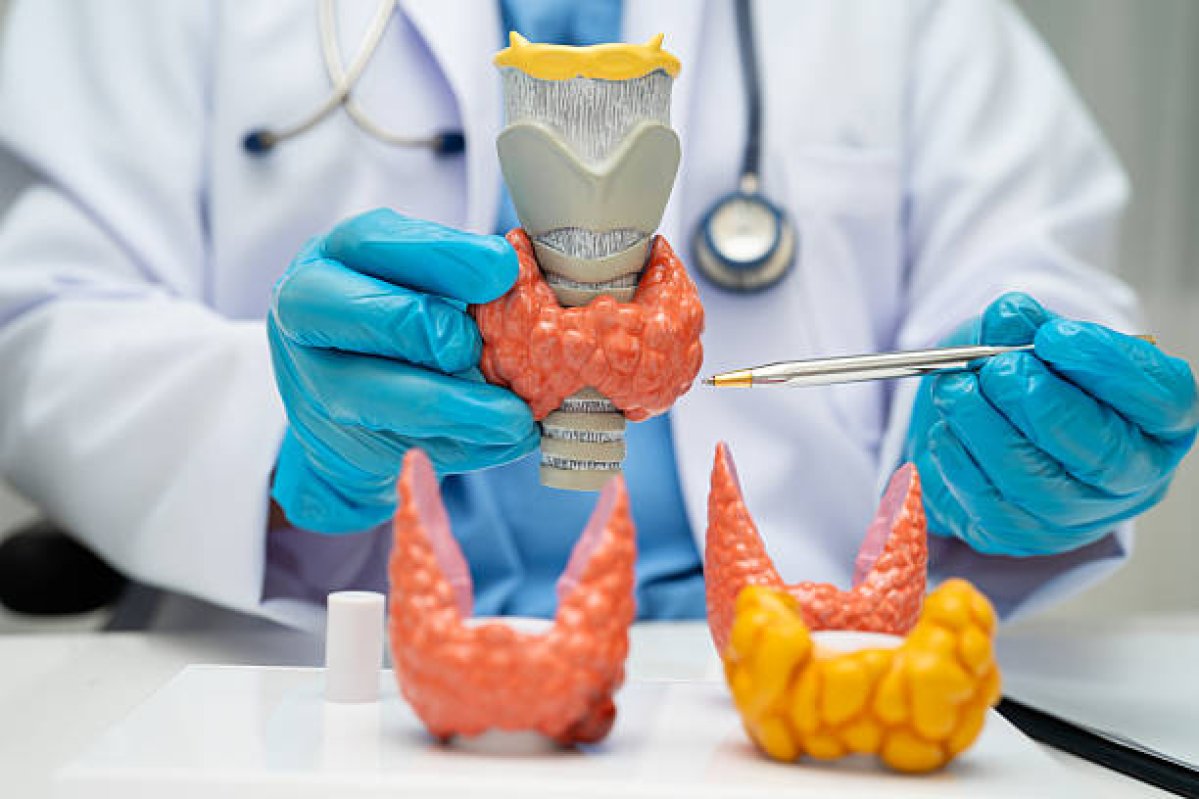

A postoperative complication rate of only 1.2% demonstrates the highest level of our team's surgical mastery.
Minimal incisions, short hospital stays, and rapid recovery.
Endocrinologists, surgeons, oncologists, and anesthesiologists collaborate to ensure a seamless continuum of care.
Thousands of successfully treated patients are the best proof of our efficacy.
We provide preoperative preparation, medical stabilization, and surgical resection of pathologically active thyroid tissue.
Depending on the size and type of nodules, we offer conservative management, sclerotherapy, or surgical intervention.
We utilize intra-organ injections (Diprospan) to reduce inflammation and help avoid surgery.
From diagnosis to surgery and neoadjuvant chemotherapy, patients receive a comprehensive treatment plan under the supervision of a multidisciplinary team.
We perform parathyroidectomies, as well as allotransplantation in complex cases.
Aesthetic and functional surgical treatment aimed at restoring proportions and self-confidence.
Diagnosis, preoperative preparation, and laparoscopic resection of neoplasms with maximum preservation of organ function.
Comprehensive angiotrophic therapy to improve microcirculation and prevent complications.
Our department covers the full spectrum of endocrine pathologies requiring surgical intervention. We treat patients with conditions of the:
- thyroid gland — nodular, multinodular, and toxic goiters, autoimmune thyroiditis, and tumors;
- parathyroid glands — hyperparathyroidism, hypoparathyroidism, and neoplastic processes;
- adrenal glands — benign and malignant neoplasms;
- endocrine complications of diabetes, particularly “diabetic foot” syndrome;
- endocrine-related aesthetic disorders, such as gynecomastia in men.
Each case is approached individually — taking into account the patient's hormonal status, overall health, and comorbidities.
Modern Surgical Technologies
The department's specialists widely utilize minimally invasive techniques that ensure high precision and minimal trauma:
- laparoscopic surgeries — performed through a few small punctures without large incisions;
- video-assisted surgeries — utilizing high-resolution visual monitoring;
- nodule sclerotherapy — a minimally invasive alternative to traditional surgery for nodular goiters;
- laser interventions — ensuring precision, safety, and rapid healing.
These methods significantly reduce hospital stay duration and allow for a faster return to normal life.