Emergency Medical Care
☎️ Emergency Department Front Desk: +380 68 654 3075, +380 56 373 0913.
The Emergency Department at Mechnikov Hospital receives patients in their most critical moments every day. People are admitted here following trauma, mine-explosive and gunshot wounds resulting from combat, blast injuries, acute cerebrovascular accidents (strokes),severe allergic reactions, massive bleeding, and more. Our team works quickly, cohesively, and professionally, as the very first minutes determine the subsequent prognosis. To patients, it is the familiar "admissions," but behind this simple name lies a powerful service operating 24/7, providing a full cycle of urgent care from initial diagnostics to emergency surgeries and transfer to specialized departments.
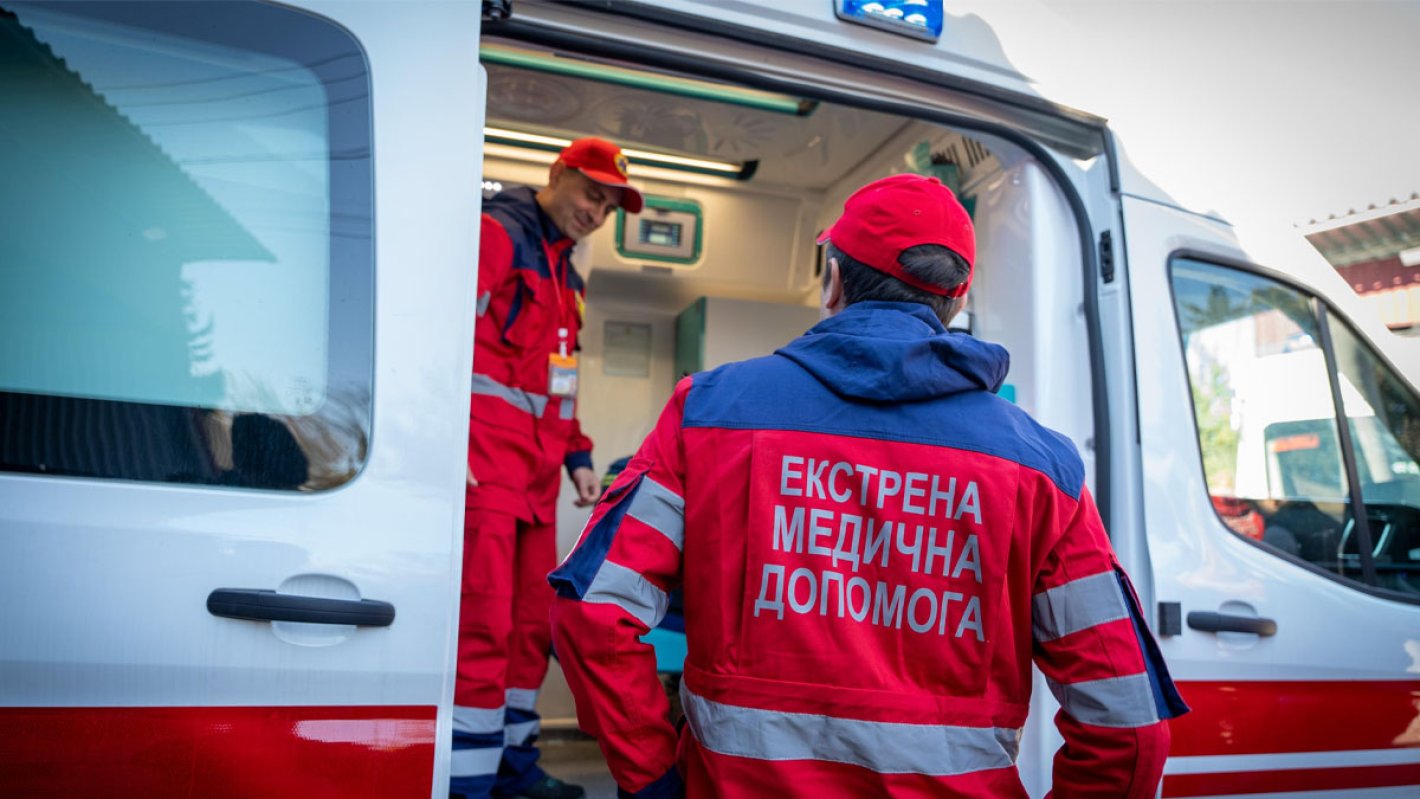
Our team works without breaks or days off. The patient receives care immediately upon arrival - regardless of the time of day, day of the week, or the service workload. This is critical for wounds, massive hemorrhage, heart attacks, and strokes, when every minute determines the outcome.
A high volume of urgent cases builds unique practical experience within the team, directly improving the quality of care. The physicians at Mechnikov Hospital work daily with the most severe patients - from polytrauma to strokes and vascular catastrophes.
Complex imaging can be performed immediately upon admission. For example, during a stroke, a CT and CT angiography are performed in the very minutes the team is assessing the patient's condition. This minimizes time loss and increases the chances of recovery.
With the onset of full-scale war, the hospital increased the number of on-call teams to ensure care for a large number of wounded and injured. Mechnikov Hospital is one of the key hospital centers in the country for managing mine-explosive and gunshot wounds.
The team has worked through numerous missile attacks where dozens of people were admitted simultaneously. The system is organized so that everyone receives care: a clear triage algorithm, multidisciplinary teams, and the involvement of additional specialists if necessary.
Mechnikov Hospital is one of the few medical centers in the country where neurosurgical care is available 24/7 at the level of highly specialized clinics. This is where complex brain, spine, and spinal cord surgeries are performed. This means the patient receives the highest level of treatment in critical minutes, when seconds count.
Physicians from almost all core specialties are permanently present in the department: neurosurgeon, cardiologist, neurologist, vascular surgeon, traumatologist, ENT, maxillofacial surgeon, urologist, gynecologist, anesthesiologists, ultrasound, CT, and MRI specialists. This means no waiting for consultations - decisions are made instantly.
The department has everything needed nearby: a resuscitation room, urgent operating rooms, CT, MRI, angiography, and a laboratory. The patient wastes no time on transportation between departments or medical facilities. This organization allows for quick decision-making and the commencement of treatment without delays.
If a patient needs urgent intervention, they are taken to the operating room immediately. No delays, no unnecessary transfers, no administrative hurdles. The availability of three operating rooms (neurosurgical, general surgical, trauma) allows multiple interventions to be performed simultaneously—crucial during mass casualty events.
Expert Opinion
"There are no minor details or random decisions in emergency medicine—every second determines the outcome. When a patient comes to us in critical condition, it is vital that all units work as one team: the physician who first assesses vital signs, the anesthesiologist who stabilizes airway and circulation, and the neurosurgeon or cardiologist who makes split-second decisions about surgery or intervention. This cohesion is no accident; it is the result of years of practice and constant readiness for the toughest challenges. Our goal is not just to save a life in the moment. We fight to ensure the patient has a chance to return to mobility, communication, work, and normal life. This is the true essence of urgent care: to act swiftly, precisely, and in a way that the outcome matters not only today but in the future." - Volodymyr Kunyk, Head of the Emergency Department.
How the Department is Organized
Patients arrive at the Emergency Department via various routes: they are brought in by emergency medical services (EMS) teams, transferred from other hospitals, or walk in on their own.
Patients in critical condition are immediately directed to the resuscitation room, where anesthesiology teams take over. Here, we conduct vital sign monitoring, anti-shock measures, airway and hemodynamic stabilization, and preparation for emergency surgery or transfer to the intensive care unit (ICU).
Patients in a more stable condition are first examined by an emergency physician. They undergo necessary lab tests, ultrasound diagnostics, CT or MRI scans, and consultations with surgeons, neurologists, cardiologists, traumatologists, and other specialists. The team then determines the treatment strategy: admission, surgery, or outpatient observation.
The vast majority of patients undergo initial diagnostics and receive a decision regarding admission or surgery within approximately one hour of arrival. In critical cases (wounds, stroke, heart attack, massive hemorrhage),the medical team begins providing care within the very first minutes.
A Team Working Around the Clock
Physicians of virtually all specialties required for the full spectrum of emergency care are on duty in the department at all times. During wartime, the number of on-call teams has been increased. The team includes emergency physicians, anesthesiologists, neurosurgeons, general and vascular surgeons, traumatologists, ENT specialists, maxillofacial surgeons, urologists, gynecologists, neurologists, cardiologists, internists, ultrasound physicians, and CT and MRI specialists.
During mass casualty events, the entire on-call team is mobilized in the department, and additional teams are called in from home if necessary. This ensures immediate care for a large number of casualties without compromising the quality of treatment.
Equipment and Technologies
Three anesthesiology teams work continuously in the resuscitation room. State-of-the-art equipment is utilized: mechanical ventilators, vital signs monitors, infusion pumps, and patient warming systems. An urgent operating block with three operating rooms—neurosurgical, general surgical, and traumatological—is located nearby.
CT, MRI, angiography, and our own rapid-response laboratory are available 24/7. This allows diagnostics and surgeries to be performed immediately upon admission without delays.
Emergency Care for the Most Common Conditions
The Emergency Department at Mechnikov Hospital admits patients presenting with the entire spectrum of critical conditions.
Emergency Neurology and Neurosurgery
When a stroke is suspected, the stroke team is activated: a neurologist, neurosurgeon, cardiologist, and interventional neuroradiologist. An immediate CT or MRI and CT angiography are performed. Depending on indications, systemic thrombolysis and mechanical thrombectomy are carried out.
The department performs urgent neurosurgical interventions for severe traumatic brain injuries, hematomas, acute herniated discs with compression of the spinal cord or nerve roots, tumors with mass effect, risk of herniation, or occlusive hydrocephalus.
In addition to strokes, the department admits patients with other severe neurological conditions requiring urgent care. These include myasthenic crisis, which is accompanied by a sharp deterioration in muscle strength and respiratory impairment; the onset or exacerbation of multiple sclerosis with sudden neurological deficits; Guillain-Barré and Miller Fisher syndromes, and Landry's ascending paralysis, which can lead to paralysis of the respiratory muscles. Care is also provided for meningitis and meningoencephalitis, vertebrogenic pain syndromes in the acute phase, and acute facial nerve palsy. All these conditions require rapid diagnostics, intensive care, and a multidisciplinary approach.
Acute Cardiac Conditions
For chest pain, shortness of breath, or suspected myocardial infarction, the patient undergoes an urgent ECG, troponin test, laboratory bloodwork, and a CT scan. Urgent coronary angiography and coronary artery stenting are available 24/7.
Care is also provided for pulmonary embolism, severe arrhythmias, cardiogenic and arrhythmogenic shock, acute heart failure, and complicated hypertensive crises.
Surgical Emergencies
The department admits patients with acute appendicitis, cholecystitis, hollow organ perforations, gastrointestinal bleeding, strangulated hernias, and purulent-septic processes.
Vascular surgeons provide care for ruptured aneurysms, traumatic vascular injuries, arterial and venous thromboses, and critical limb ischemia.
Thoracic Emergencies
The Emergency Department provides urgent care for life-threatening diseases and injuries of the chest organs. These include spontaneous or traumatic pneumothorax, pulmonary hemorrhage, tracheal and bronchial injuries, esophageal trauma, as well as purulent-inflammatory processes like lung abscesses or mediastinitis. These conditions can rapidly lead to respiratory failure, so patients immediately come under the care of anesthesiologists and thoracic surgeons. The team ensures respiratory support, pleural cavity drainage, patient stabilization, and preparation for urgent surgical intervention. A separate group includes diaphragmatic hernias and spontaneous esophageal ruptures, which require immediate surgical treatment.
Purulent-Septic Emergencies
At Mechnikov Hospital, we treat severe purulent-inflammatory processes that can spread rapidly and cause sepsis. These include phlegmons and soft tissue abscesses, purulent bone infections, purulent complications of oncological diseases, and complicated forms of ulcerative colitis. The team also manages critical conditions associated with diabetic foot syndrome, where the patient requires urgent surgical debridement, intensive antibiotic therapy, and stabilization of vital functions. All interventions are performed emergently, as delays can lead to tissue necrosis or septic shock.
Trauma Care
The team handles all types of injuries: closed and open fractures, dislocations, wounds, and blast and gunshot injuries. Based on indications, urgent surgeries are performed using external fixation devices, plates, screws, and metal constructs, alongside reconstructive interventions.
Emergency Urology
Care is provided for acute urinary retention, renal colic, urinary tract injuries, obstructions, infections presenting with high fever and a risk of sepsis, and bleeding from the kidneys or bladder.
Gynecological and Obstetric Critical Conditions
We provide care for uterine bleeding, ovarian apoplexy, torsion or rupture of an ovarian cyst, ectopic pregnancy, and pelvioperitonitis.
The maternity ward is on duty 24/7 and admits pregnant women with bleeding, abdominal pain, leakage of amniotic fluid, signs of preeclampsia, as well as acute surgical conditions during pregnancy (acute appendicitis, cholecystitis, bowel obstruction) that require the simultaneous involvement of obstetricians, surgeons, and anesthesiologists.
ENT Emergencies
Care is provided for massive epistaxis (nosebleeds),foreign bodies in the nose, pharynx, or airways, acute airway obstruction, severe purulent processes (mastoiditis, pharyngeal abscess),anaphylaxis with laryngeal edema, and ENT trauma.
Maxillofacial Surgery
The team provides care for facial fractures, open wounds with massive bleeding, phlegmons of the floor of the mouth, deep infections that can spread to the neck and mediastinum, injuries with a risk of airway obstruction, necrotic processes, and odontogenic complications.
Allergological Emergencies
The department admits patients with anaphylactic shock, angioedema, status asthmaticus, severe drug and food reactions, as well as Stevens-Johnson syndrome and toxic epidermal necrolysis (Lyell's syndrome). The team ensures immediate stabilization: administration of epinephrine, corticosteroids, and pharmacological support for airway and circulation.
Rheumatological Emergencies
The department admits patients with systemic vasculitis, severe forms of systemic lupus erythematosus, dermatomyositis, systemic scleroderma, and antiphospholipid syndrome. Such conditions can be accompanied by involvement of the lungs, kidneys, brain, heart, thromboses, or severe inflammation. Care includes patient stabilization, intensive therapy, and co-management with rheumatologists.
Nephrological Critical Conditions
We provide care for acute kidney injury, nephrotic syndrome, severe hypertensive crises, renal transplant rejection crises, electrolyte imbalances, and conditions accompanied by edematous syndrome or a sharp decline in kidney function.
Psychiatric Emergencies
The team works with patients experiencing psychomotor agitation, hallucinations, delusions, catatonic states, lethal (febrile) catatonia, suicidal behavior, acute psychoses, alcoholic psychoses, and severe withdrawal states. The primary goal is patient safety and stabilization of the somatic condition, followed by transfer to a specialized psychiatric facility.
How to Contact Us
In case of sudden chest pain, impaired speech or movement, severe bleeding, shortness of breath, loss of consciousness, or any of the listed urgent conditions, you must immediately call "103" or go directly to the Emergency Department on your own.
After stabilization, the patient continues treatment in a specialized department, and subsequently may receive a consultation at the hospital's consultative polyclinic via an electronic referral from a family doctor or another specialist under the state medical guarantees program. If there is no electronic referral, the patient can pay for the consultation at the hospital's cashier according to the price list.
Do not delay seeking help in an emergency. Even a slight deterioration in well-being can conceal a serious threat, and timely care significantly increases the chances of recovery. We work around the clock to admit you at any moment, stabilize your condition, and provide a full spectrum of urgent care. Reach out—we are here when you need it most!